 New
See it
One baby, one record
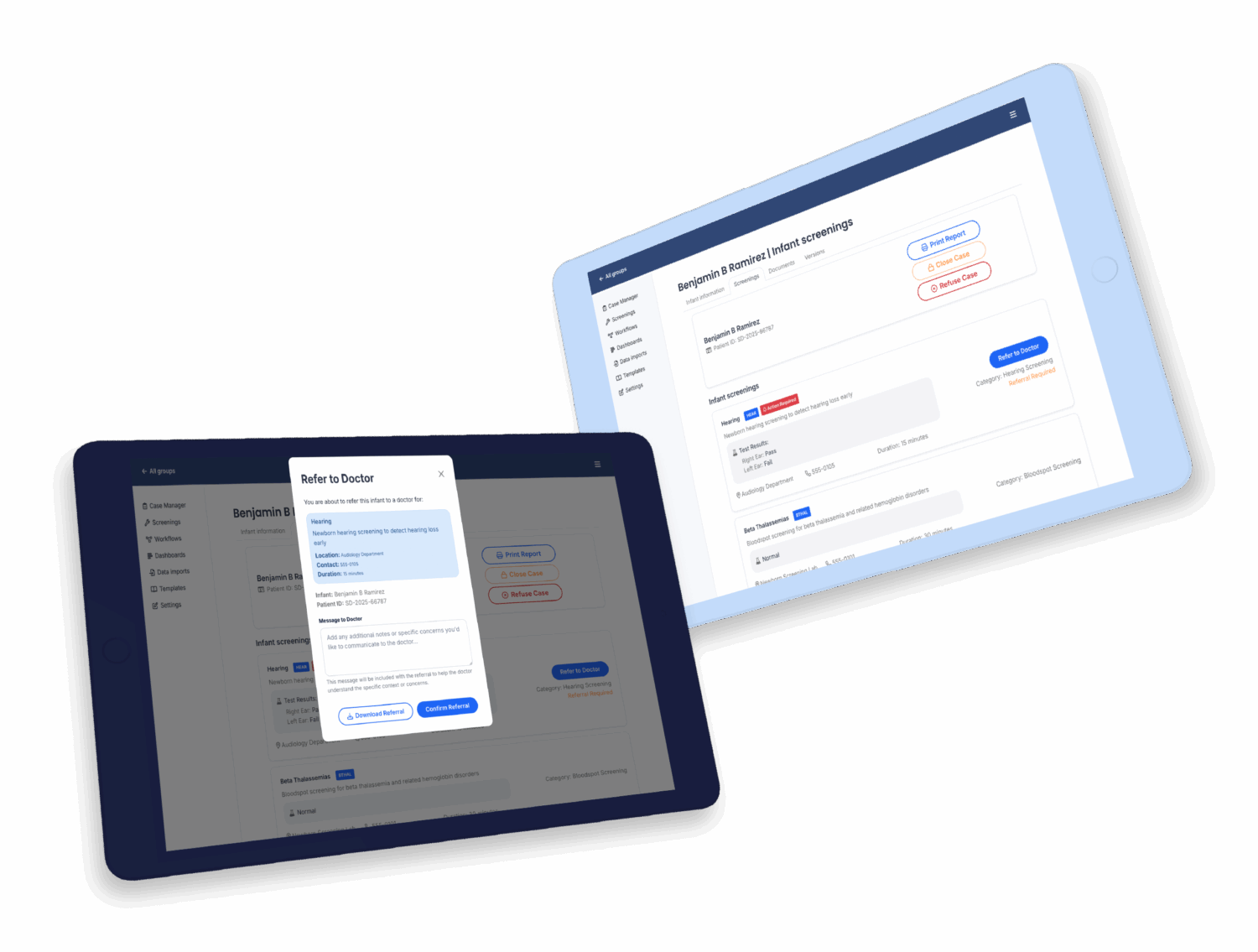
Hearing, critical congenital heart disease (CCHD), and bloodspot results, lab data, vital records, and every follow-up step sit in one case record, with a to-do list for each person on the team.
Case management software for newborn screening follow-up teams: one record for each baby, from the first result to the final visit.
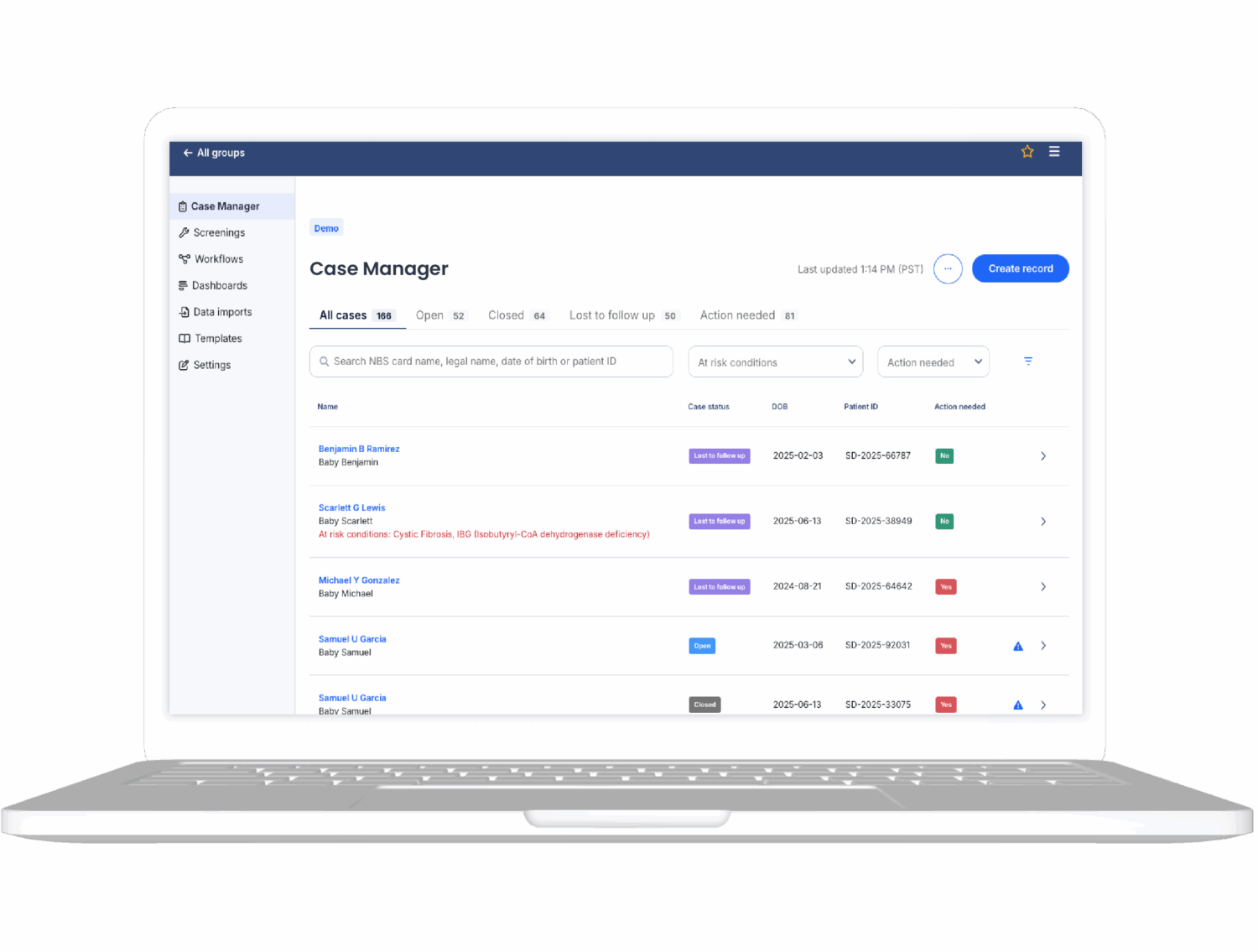
Hearing, critical congenital heart disease (CCHD), and bloodspot results, lab data, vital records, and every follow-up step sit in one case record, with a to-do list for each person on the team.
Why now
Follow-up teams do careful work. There is more of it every year.
As conditions are added to a state’s panel, each one brings its own follow-up pathway.
The birth facility, the lab, primary care, specialists, and the family each hold a piece of every case.
Programs are asked to stay with a baby past the first result, through confirmatory testing and into long-term follow-up.
What gets easier
Daily alerts and simple to-do lists give every open case an owner and a next step.
Results from your public health lab and records from vital records arrive in the case record, merged across name changes and mismatches.
In-app dashboards answer the daily questions, and a customizable reporting tool produces what your program reports on.
Safe to say yes
Data from your public health lab, vital records, and other agencies comes together in one system.
Add new conditions and workflows without IT support as your state or territory’s requirements change.
We start by understanding your program, configure the system to your workflows, and support you after go-live.
HITRUST certified and HIPAA compliant, with role-based access for your team and for providers.
Why trust us
We can’t name the state until it approves. Talk to us and we’ll share what we can.
A leading state public health department chose Newborn Screening Case Management for its follow-up program.
Developed with guidance from experienced newborn screening program advisors, including Amy Gaviglio, MS, CGC.
The same team connects county and state public health laboratories for electronic orders and results through LabConnect.
FAQ
Newborn screening is a public health program that tests babies shortly after birth for serious but treatable diseases. It began in the 1960s with a single test for phenylketonuria (PKU) and now includes dozens of diseases, from metabolic and endocrine conditions to hemoglobinopathies, lysosomal diseases, and immune deficiencies.
Newborn screening is more than just a test. It is a coordinated system that requires quality data, testing, and follow-up from multiple timepoints and sectors (public health, medical systems, and families) to ensure the goals of newborn screening are met.
Newborn screening involves collaboration between hospitals, public health labs, and follow-up programs: hospitals collect and send samples, labs rapidly test for conditions, and follow-up teams ensure families get results and care quickly. Together, they form a safety net for early intervention.
It replaces spreadsheets and separate systems with one case record, reminders for overdue follow-up, and reporting built in.
Newborn Screening Case Management is designed for state and territory health departments who screen millions of babies annually through their newborn screening programs. These programs, as well as partnering hospitals, clinics, and healthcare providers, will appreciate Newborn Screening Case Management’s instant insights and follow-up case management capabilities. For families, the goal is fewer missed or delayed follow-ups.
Newborn screening identifies babies at risk for serious conditions so they can get diagnostic testing and treatment early, which in many cases prevents disability or death. It also provides population-level data that informs better health policies, improved screening processes, and data-driven resource planning.
Primary.Health’s platform is designed to integrate seamlessly with various healthcare systems, such as electronic health records (EHRs), laboratory information systems (LIS), Vital Records, and public health databases. This interoperability ensures smooth data exchange across platforms, enabling teams to enhance collaboration and reduce manual entry errors, whatever systems you already use.
Hearing, critical congenital heart disease (CCHD), and bloodspot screening, with case management from the first result through follow-up evaluation and intervention.
Yes. Your team can add new diseases and workflows without IT support, and the system adapts to your state or territory’s evolving requirements.
Yes. Data from public health labs, vital records, and other agencies comes together in one system, and records are merged automatically across name changes and mismatches.
Months, not years. We start by understanding your program, configure the system to your workflows, and provide ongoing support after go-live.
Yes. Primary.Health is HITRUST certified and HIPAA compliant. Access is role based and follows least-privilege principles, and data is encrypted in transit and at rest. Security documentation is available in our Trust Center.
Talk to our team. We’ll walk through your program, show the platform on your workflows, and share security documentation and references from health departments we’ve worked with. The readiness check is a quick way to see where you stand today.
See how one record keeps the lab and the follow-up team in sync, from the first data point to the final visit.